
The AI Infrastructure Is Ready. Is Your Organization?
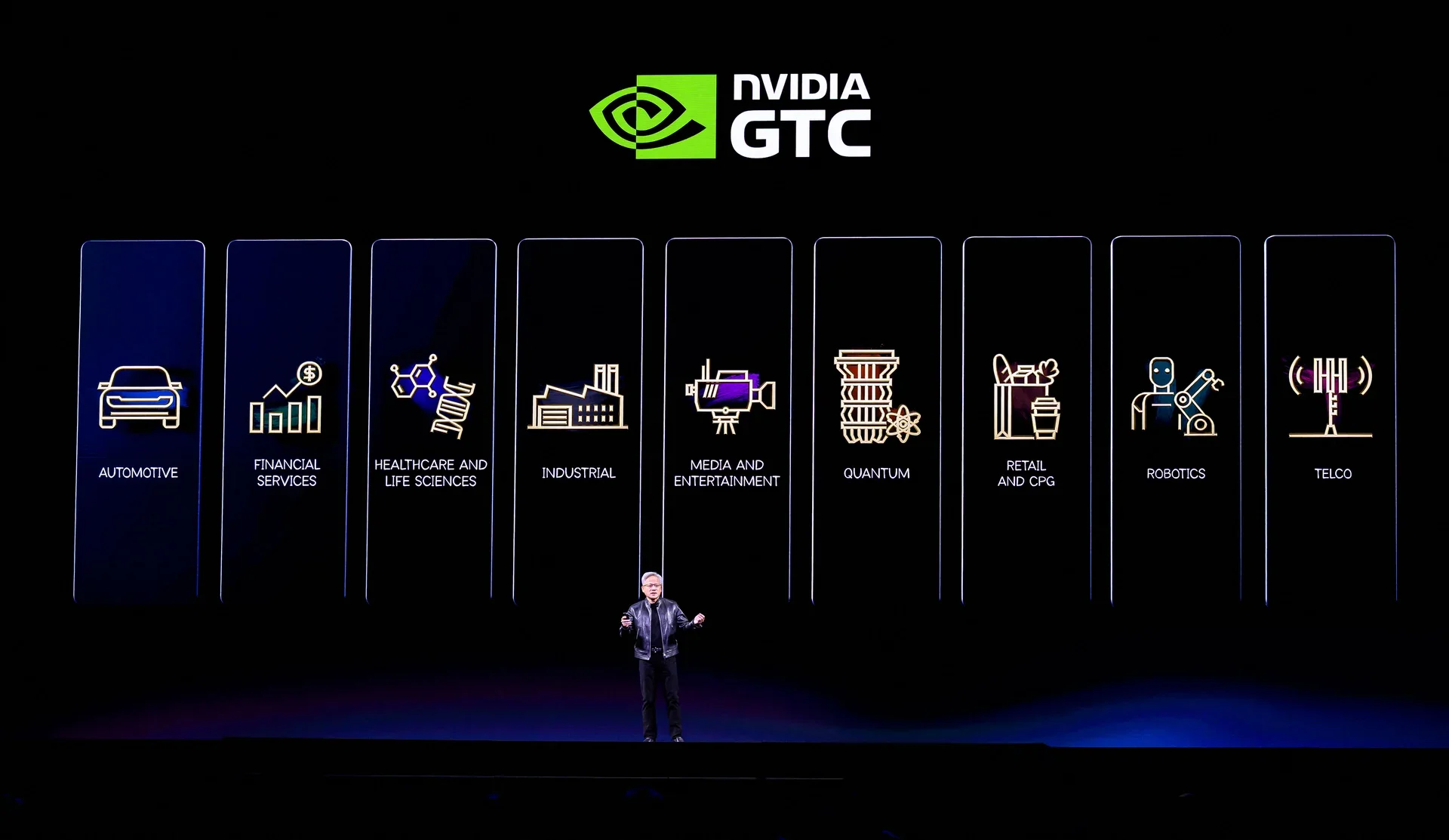
Jensen Huang spent three hours this week in front of 30,000 people at Nvidia GTC making one thing unmistakably clear: the infrastructure layer for agentic AI at scale is no longer theoretical. It's built, it's open, and it's about to get dramatically cheaper.
OpenClaw gives AI agents a standard operating environment, Jensen compared it to Windows for personal computers. NemoClaw hardens it for enterprise deployment in under an hour. Vera Rubin chips arriving later this year cut inference costs by 10x. Microsoft Azure, AWS, and Oracle are already committed. NVIDIA expects $1 trillion in chip orders through 2027. The bet is unanimous and enormous.
All of this is real. None of it is hype. And none of it solves the problem most enterprises are actually facing.
The Bottleneck Was Never the Infrastructure
Here's the pattern I see consistently at Publicis Sapient: organizations come in asking about agent platforms. Which framework to use. Which LLM to run. Whether they need an Agentic AI factory. The conversation they actually need to have first is about their data.
Not only their AI strategy. Their data.
Jensen himself acknowledged it on stage, 90% of enterprise data is unstructured, sitting in PDFs, emails, and documents that agents can't effectively query. Early adopters who fixed this saw real results: Nestlé running supply chain workloads five times faster at 83% lower cost. Snap cutting computing costs by nearly 80%. Those gains didn't come from better models. They came from making underlying data accessible.
Most enterprises haven't done that work. A 10x drop in inference costs doesn't fix it.
What I Actually Do First

When a client wants to deploy AI agents, the first engagement is almost never about agents. It's a data maturity discussion, understanding what data exists, where it lives, how clean it is, and whether it's structured in a way agents can use to make reliable decisions.
From there, we build a scoped POC on a narrow use case where the data is ready. With a global financial payments client, that meant a single social listening workflow. With a global telco client, one intelligence data pipeline. Not to prove that AI works, those clients already believed that. To prove it works here, on this problem, with this data. That POC becomes the business case and the blueprint for what comes next.
A quick self-diagnostic: can your agents access more than half the data they'd need to complete their most important tasks? If the answer isn't an immediate yes, that's your starting point — not the framework selection.
The organizations skipping this and going straight to agent deployment generate the failure stories. Not because the models are weak but because powerful systems on unprepared data don't deliver better outcomes. They deliver worse ones, faster.
What GTC Actually Changed
NVIDIA's announcements this week matter. The economics of running AI agents at enterprise scale are about to shift significantly. Workflows that couldn't justify the compute spend in 2025 will be viable by end of 2026. The orchestration layer now exists as open infrastructure, removing a genuine barrier for organizations waiting for standards before committing.
But the enterprises that will benefit most from what NVIDIA built this week aren't the ones starting their agent journey today. They're the ones that spent the last twelve months doing the unglamorous work — assessing data maturity, structuring what agents will rely on, governing use cases before scaling them.
For everyone else, faster infrastructure is a faster path to the same wall.
Before you build your agentic AI strategy, the question isn't which framework to choose. It's whether your data is ready for agents to use. If you're not sure, that's where to start.
If this is a conversation you're working through, I'd welcome the discussion.
Sources: NVIDIA GTC 2026 Keynote, Jensen Huang (March 17, 2026) · Futurum Research, "At GTC 2026, NVIDIA Stakes Its Claim on Autonomous Agent Infrastructure" (March 16, 2026) · NVIDIA State of AI Report 2026 · Beam.ai, "Jensen Huang's NVIDIA GTC 2026 Keynote: 5 Announcements That Change Enterprise AI Strategy" (March 17, 2026)